Welcome to the Telltale Asylum
Where Edgar Allan Poe Is Read, Not Repeated
Essays, primary sources, and literary history tracing The Raven, its editors, its editions, and the enduring shadow Poe left on American literature.
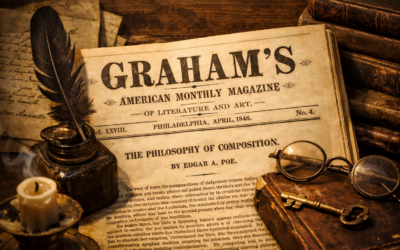
Edgar Allan Poe and The Philosophy of Composition
The April 1846 issue of Graham’s American Monthly Magazine of Literature and Art, in which Edgar Allan Poe first published The Philosophy of Composition. When Edgar Allan Poe published The Philosophy of Composition in 1846, he did something unusual for an American...
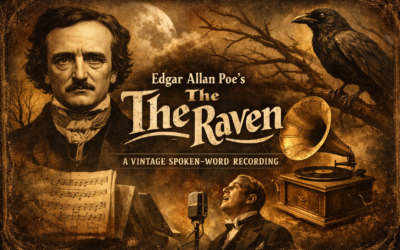
Edgar Allan Poe’s The Raven — A Spoken-Word Record from the Dawn of Recorded Literature
Long before Edgar Allan Poe’s The Raven became a classroom staple, a Halloween cliché, or a soundtrack to gothic aesthetics, it lived where Poe intended it to live: in the ear. The poem was engineered to be heard. Its internal rhyme, obsessive repetition, and funereal...
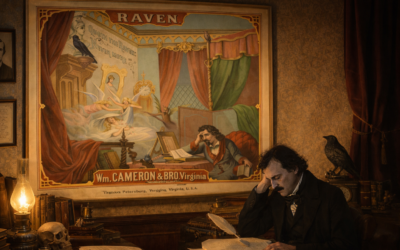
The Raven in the Room: Poe’s Shadow Over a Victorian Advertisement
This 19th-century chromolithograph is one of the clearest signs that Edgar Allan Poe had already crossed from literature into lived culture. It isn’t an illustration made to accompany a book or a poem—it’s an advertisement. And yet it leans completely on the...
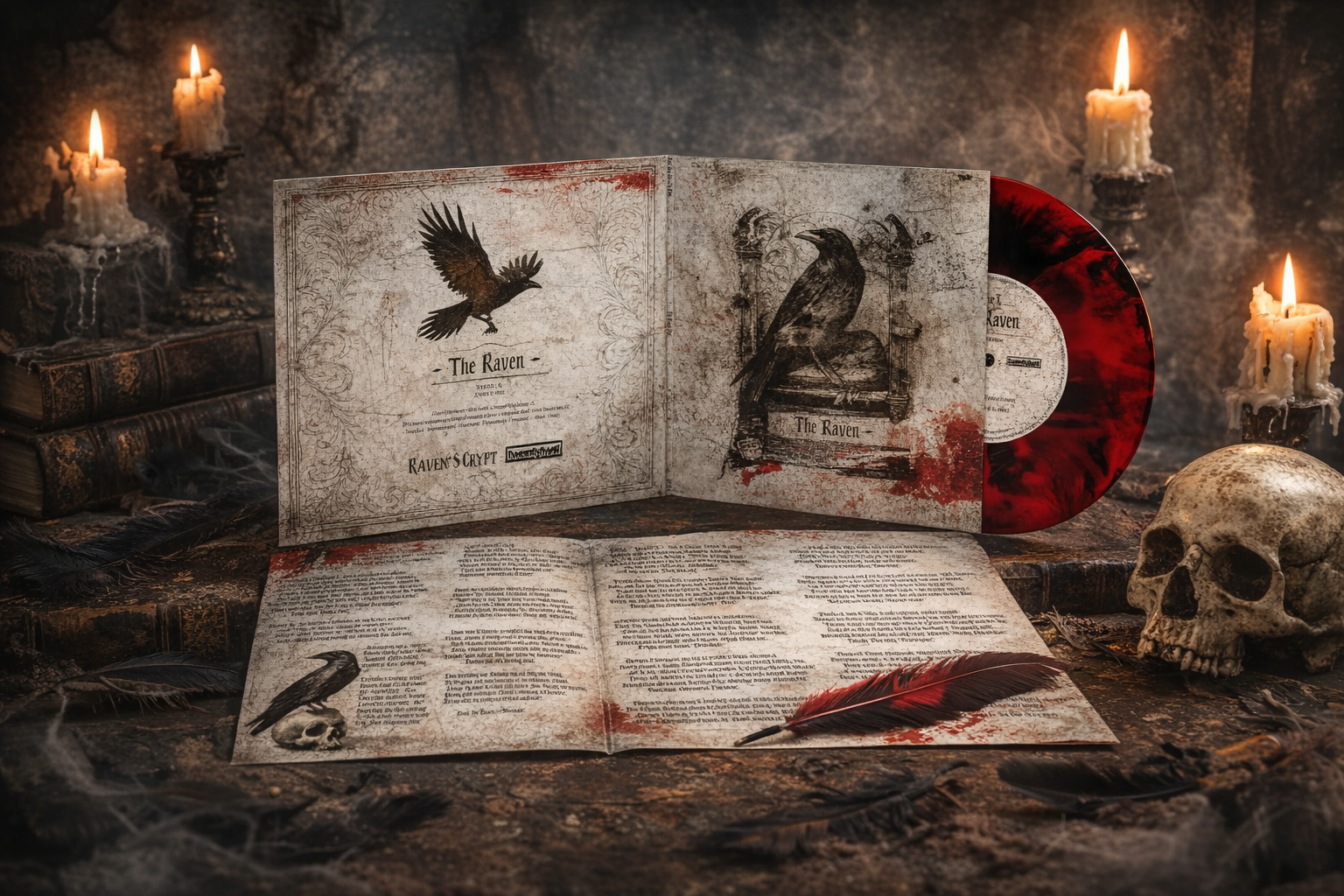
Review: Edgar Allan Poe – The Raven (7″ Limited Edition Vinyl)
Edgar Allan Poe’s The Raven on Vinyl: A Spoken-Word Artifact for the Modern Gothic Reader Edgar Allan Poe’s The Raven is one of those rare literary works that almost everyone recognizes, yet few truly experience anymore. Quoted endlessly, parodied relentlessly, and...
The Raven: The Poem That Refuses to Die
Few works of literature have achieved what The Raven has: instant recognition, endless reinterpretation, and a cultural afterlife that spans nearly two centuries. First appearing in a New York newspaper in January 1845, the poem transformed Edgar Allan Poe from a...
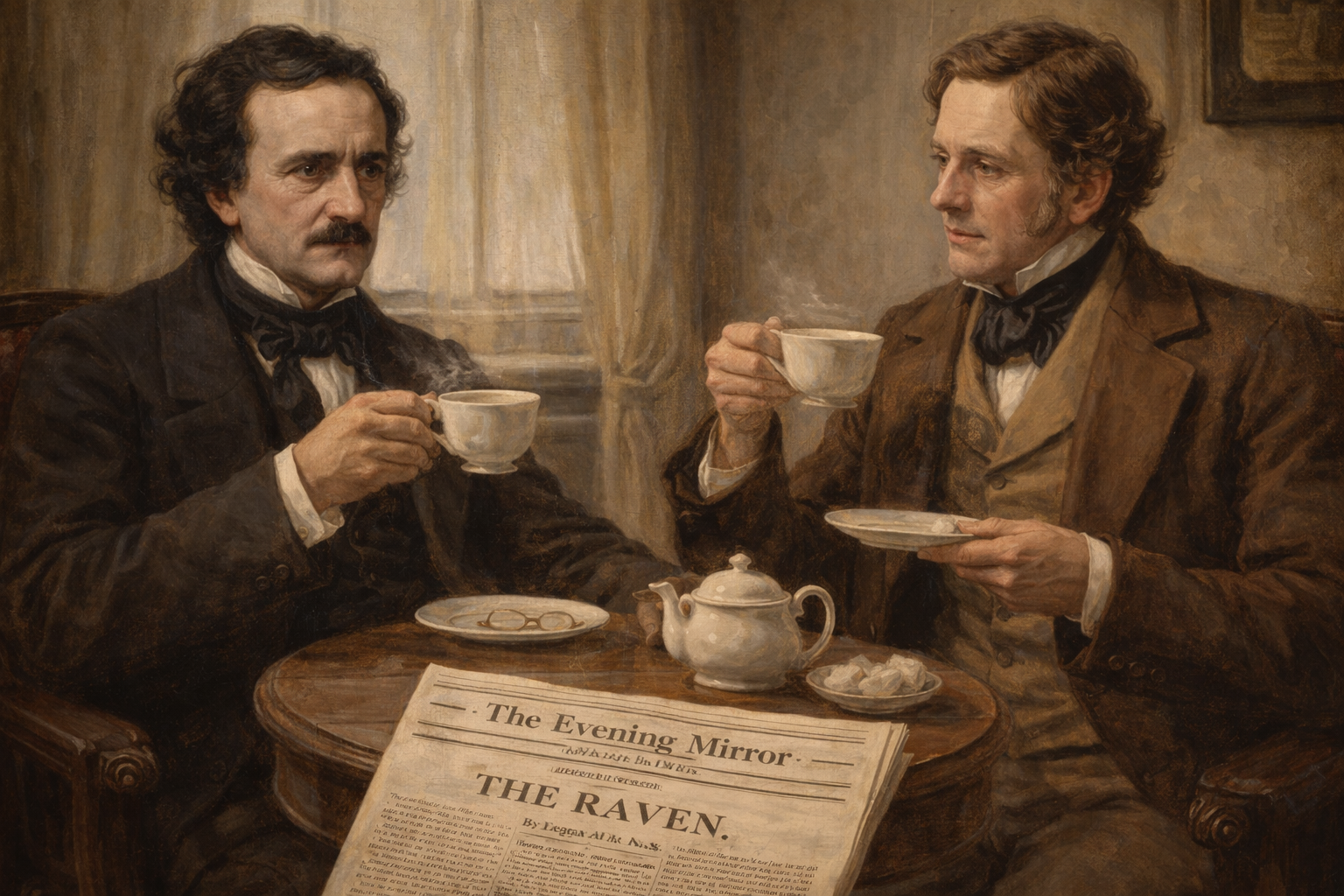
Edgar Allan Poe and Nathaniel Parker Willis: Editorial Authority, The Raven, and the New York Literary Press
In the history of American literature, Edgar Allan Poe is often portrayed as a solitary figure—brilliant, embattled, and perpetually at odds with the institutions of his time. Yet Poe did not operate in isolation. Like all professional writers of the nineteenth...

Nathaniel Parker Willis on Edgar Allan Poe — Democrat and Sentinel (November 10, 1858)
Archival Description & Context Document Overview This newspaper page, published on November 10, 1858, in the Democrat and Sentinel of Ebensburg, Pennsylvania, contains a reprinted letter by Nathaniel Parker Willis concerning Edgar Allan Poe. The article appears...
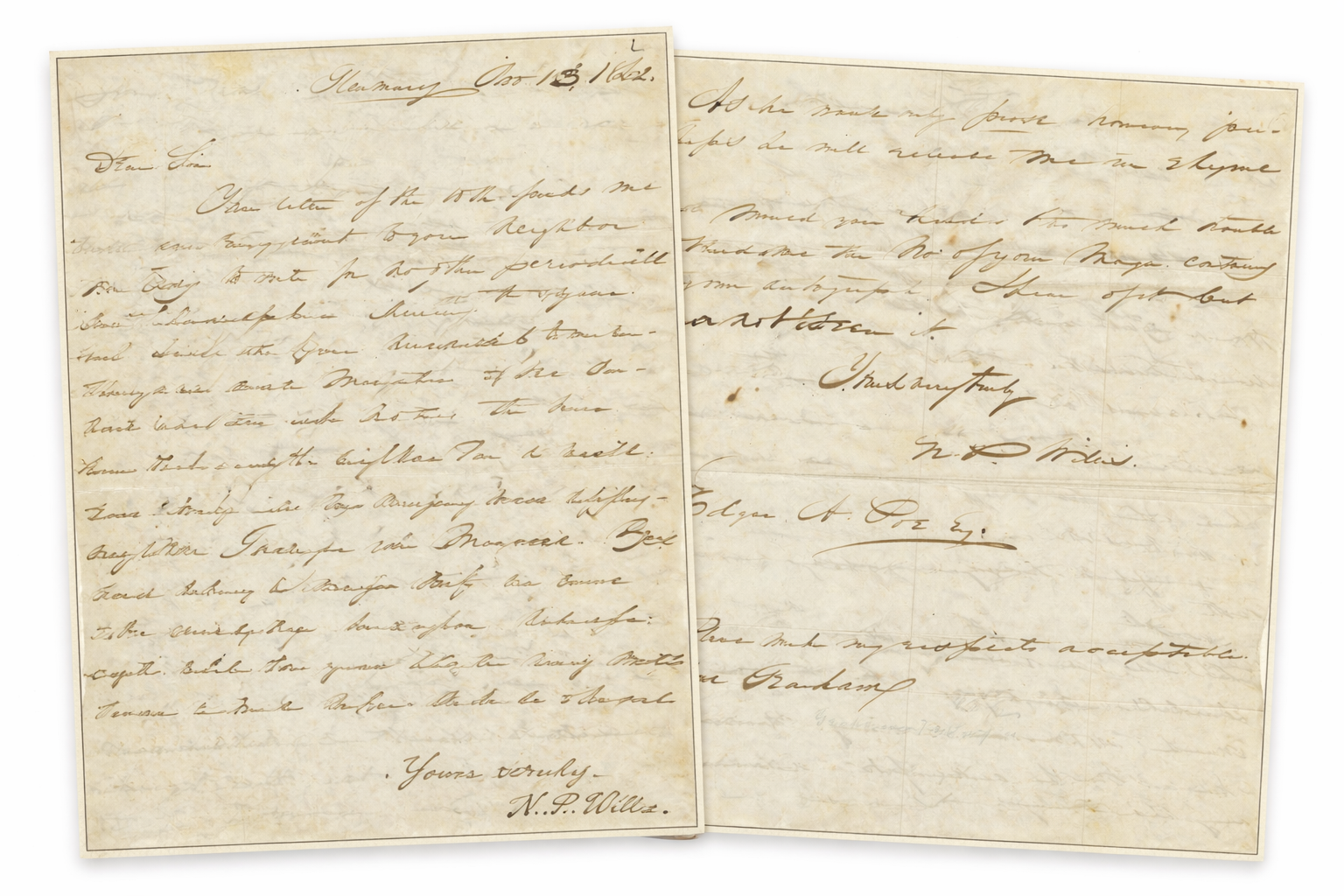
Letter from Nathaniel Parker Willis to Edgar Allan Poe (October 13, 1842)
Document Overview This handwritten letter, dated October 13, 1842, was written by Nathaniel Parker Willis and addressed to Edgar Allan Poe. Composed from Glenmary, the letter documents a moment of active professional correspondence between editor and author during a...
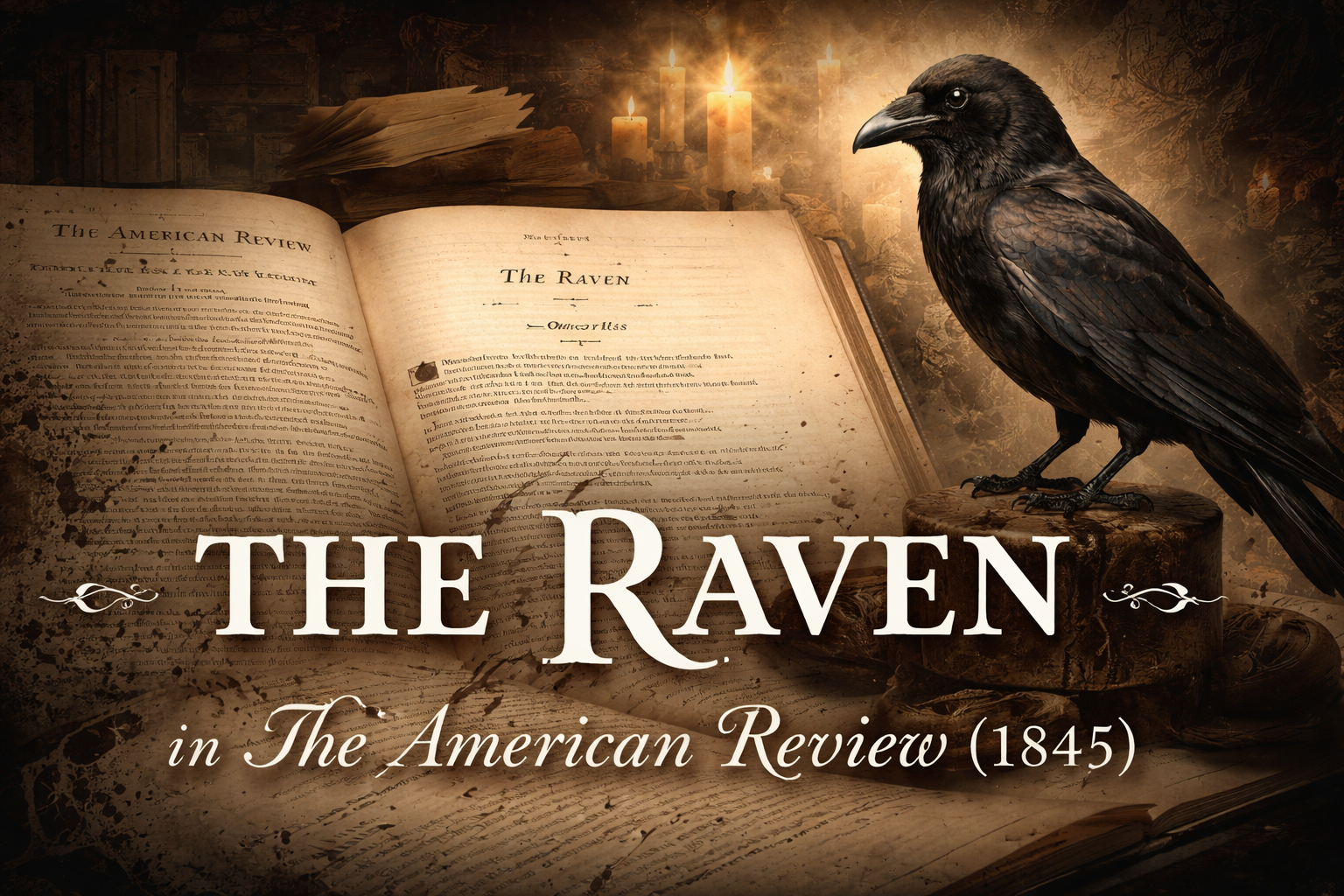
“The Raven” in The American Review (1845)
The Poem That Entered American Literature in Disguise** In early 1845, American readers encountered a poem unlike anything they had seen before. It arrived quietly, embedded within the pages of a new literary and political journal, signed not by a known author but by...
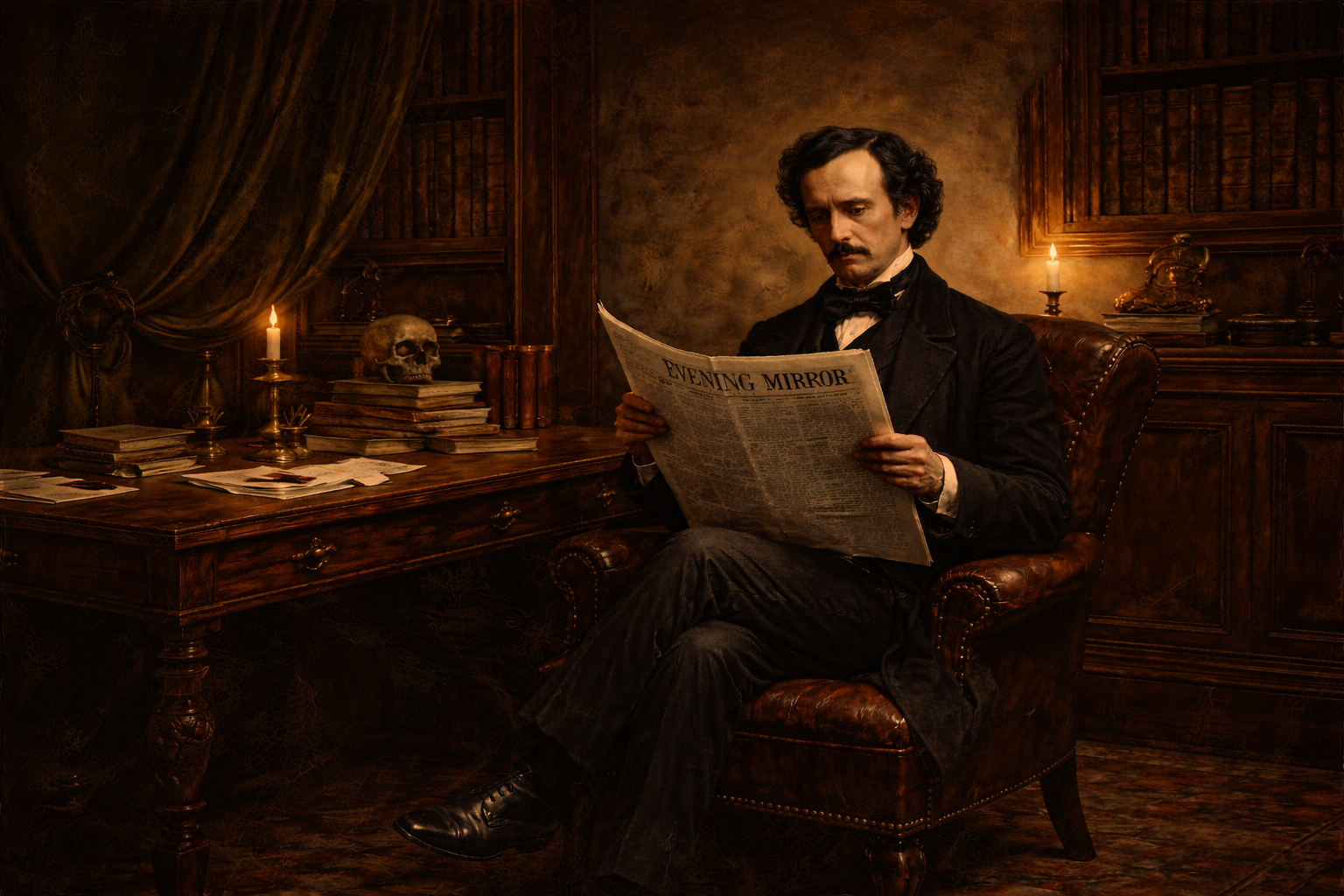
The Raven (1845): Edgar Allan Poe’s Poem as It First Appeared in the New York Evening Mirror
The complete original newspaper publication, its historical moment, and how a single printed page unleashed “Nevermore” upon the world The Newspaper Page That Changed American Literature Before The Raven became one of the most recognizable poems in the English...
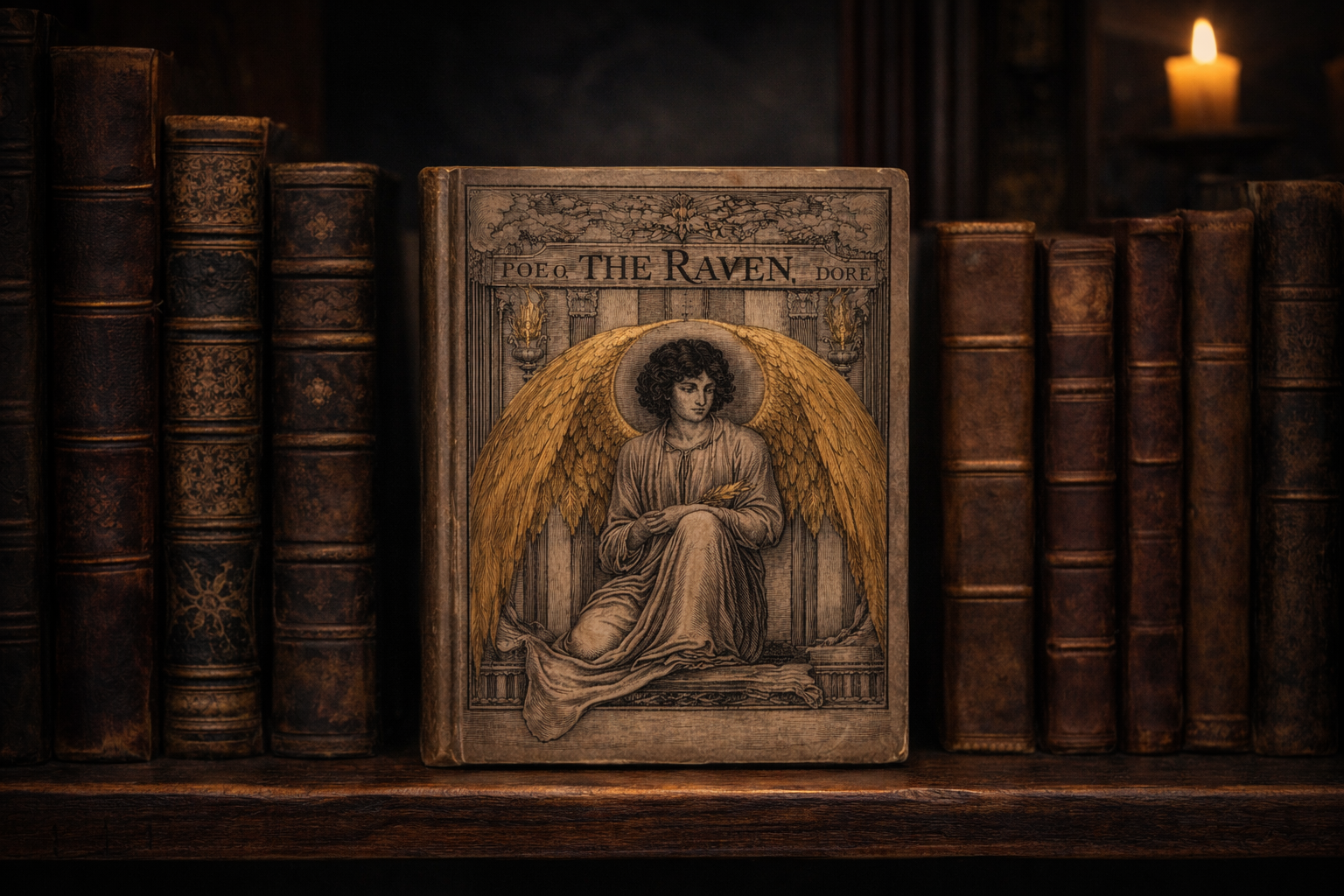
The Raven (1884) — Harper & Brothers Edition, Illustrated by Gustave Doré
Overview This page presents a public-domain digital facsimile of the 1884 Harper & Brothers edition of The Raven by Edgar Allan Poe, illustrated by Gustave Doré. The material is preserved here to provide stable access for reading, research, and citation. The...
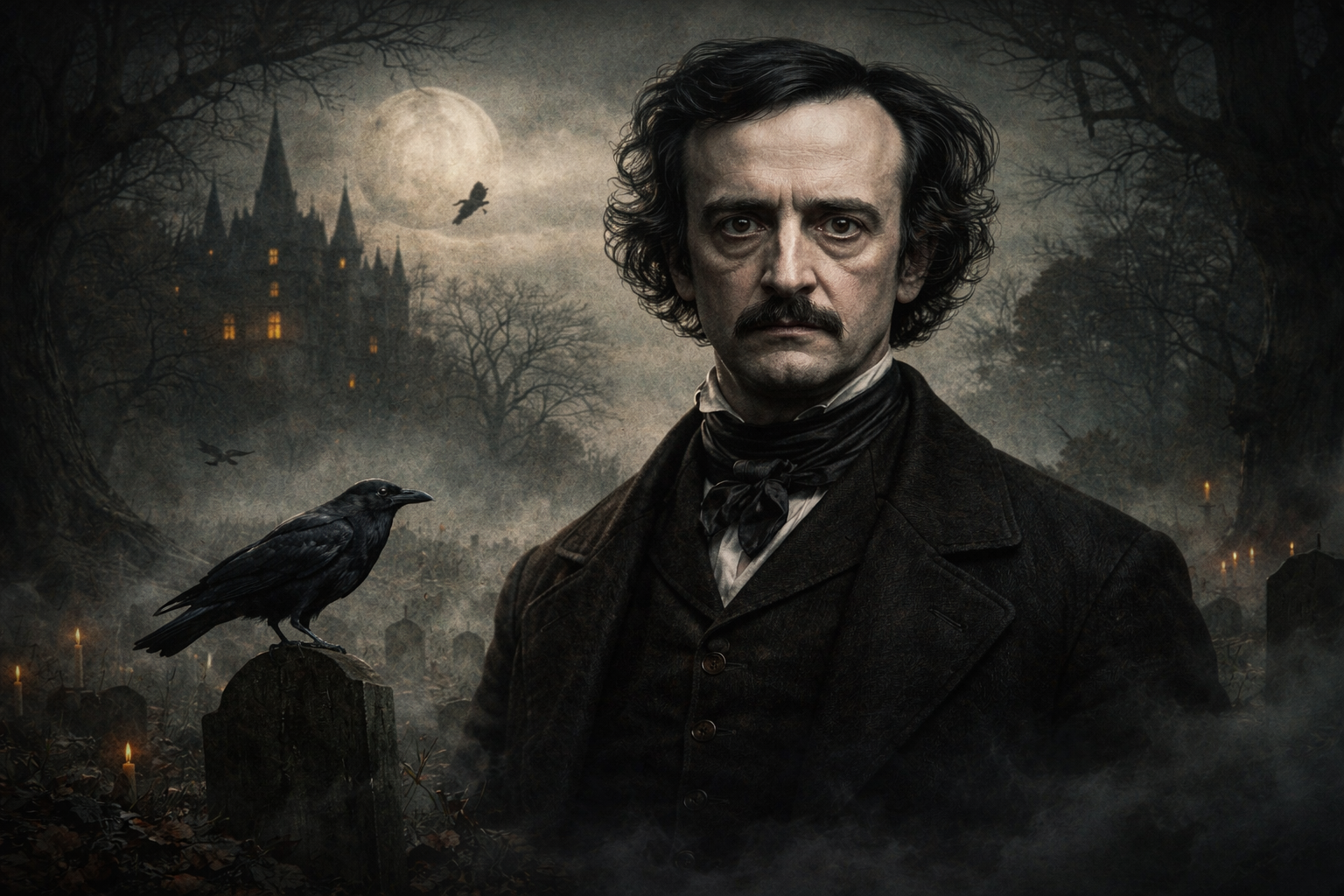
Edgar Allan Poe: Life, Works, Death, and Why He Still Haunts Literature Today
Few figures in American literature stand as tall—or cast as long a shadow—as Edgar Allan Poe. His name evokes images of candlelit chambers, storm-tossed nights, and the ever-present whisper of madness that lurks just beneath the surface of the civilized mind. Poe was...